DIGITAL REAL ESTATE · ESSAY
The Wild West 2.0: Why the Settlers of Digital Real Estate Will Own the Next Economy
By Terence Latimer · Take the Digital Real Estate Audit →
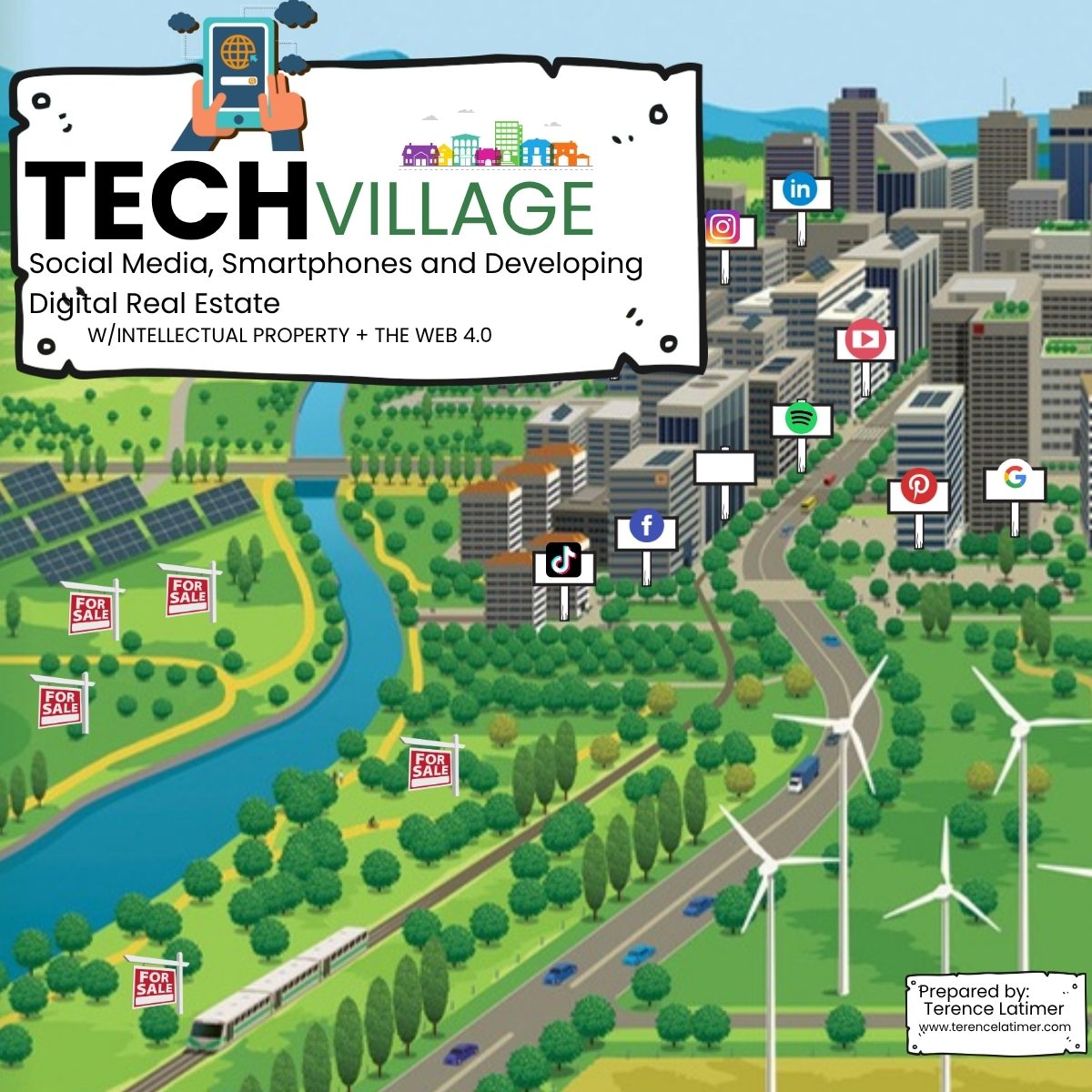
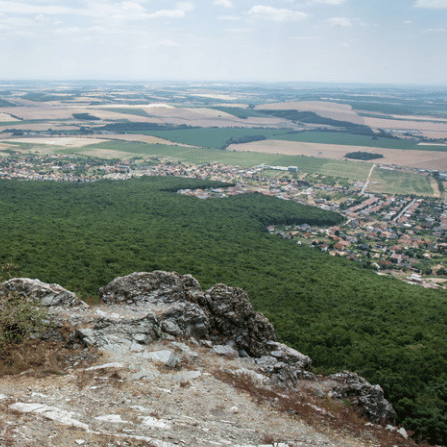
Tech Village, from my 2020 deck The Digital Landscape.
IN SHORT
Own, don’t rent. Your domain, site, and email list build equity. Platform followings can vanish with one algorithm change.
The frontier is still open. Early settlers of the online world get to write the rules of the road.
The new high ground is AI. In 2026, being cited by AI answers matters as much as ranking on Google — and it rewards owned, well-built property.
In the spring of 2020 I was driving westbound on the Twentynine Palms Highway, somewhere around Yucca Valley, talking into my phone. The pandemic was a few weeks old. The roads were empty in a way the desert roads out here are usually empty only at night. And I was trying to put words to something I’d been circling for a long time — a future I believed was already being built, whether or not most people had noticed the ground shifting under them.
What I said into that recording, more or less, was this: we are living through the settling of a new frontier. Not a metaphorical one. A real one, with real land, real infrastructure, real towns going up — and, like every frontier before it, a narrow window in which the people who show up early get to write the rules of the road.
I called that frontier digital real estate. Six years later, the phrase I was reaching for on that drive is on the tip of everyone’s tongue. So I want to go back to what I actually saw from the highway, say it plainly, and then show you where the frontier stands today — because the window is still open, but it is closing, and it is not closing evenly.
What I saw from the highway
Two ideas were doing all the work in that recording.
The first was social capital. I don’t mean networking, and I don’t mean clout. I mean something closer to potential — the capacity of one person to contribute to the network around them, using whatever is within reach. A phone. A camera. A free account on a platform. An afternoon. Human societies have always run on this. What changed is that we can now quantify it — and scale it past the hard limits of the physical world.
That’s the second idea. The offline world is bounded. There is only so much land, so much time, so many hours in a body. The moment you build a digital environment, those limits loosen.
“The individual is able to do more work, connect with more people, have greater reach, and all of a sudden there’s an abundance of capital.”
THE THESIS IN ONE LINE
Owned online property lets a single person compound their reach and value past the ceilings the physical world puts on all of us.
I was naming this as a marker of what economists and technologists call the Fourth Industrial Revolution — the era, following steam, electricity, and the computer, defined by the blurring of the physical, digital, and biological. You know you’re in it, I said on the tape, because “we are all of a sudden a little bit more aware of our impact.” We can measure our footprint. And once you can measure something, you can build on it deliberately instead of by accident.
What “digital real estate” is — and what it is not
When most people hear “digital real estate” in 2026, they think of speculative virtual land — plots in Decentraland or The Sandbox, metaverse parcels flipped like penny stocks. That is not what I mean, and it is not what matters.
The digital real estate I’m talking about is the online property you actually own and build on — your domain, your website, your email list, your library of work. It’s the difference marketers now draw between owned media and rented media: owned assets build equity over time; rented ones can change the rules or disappear and take your audience with them. [1]
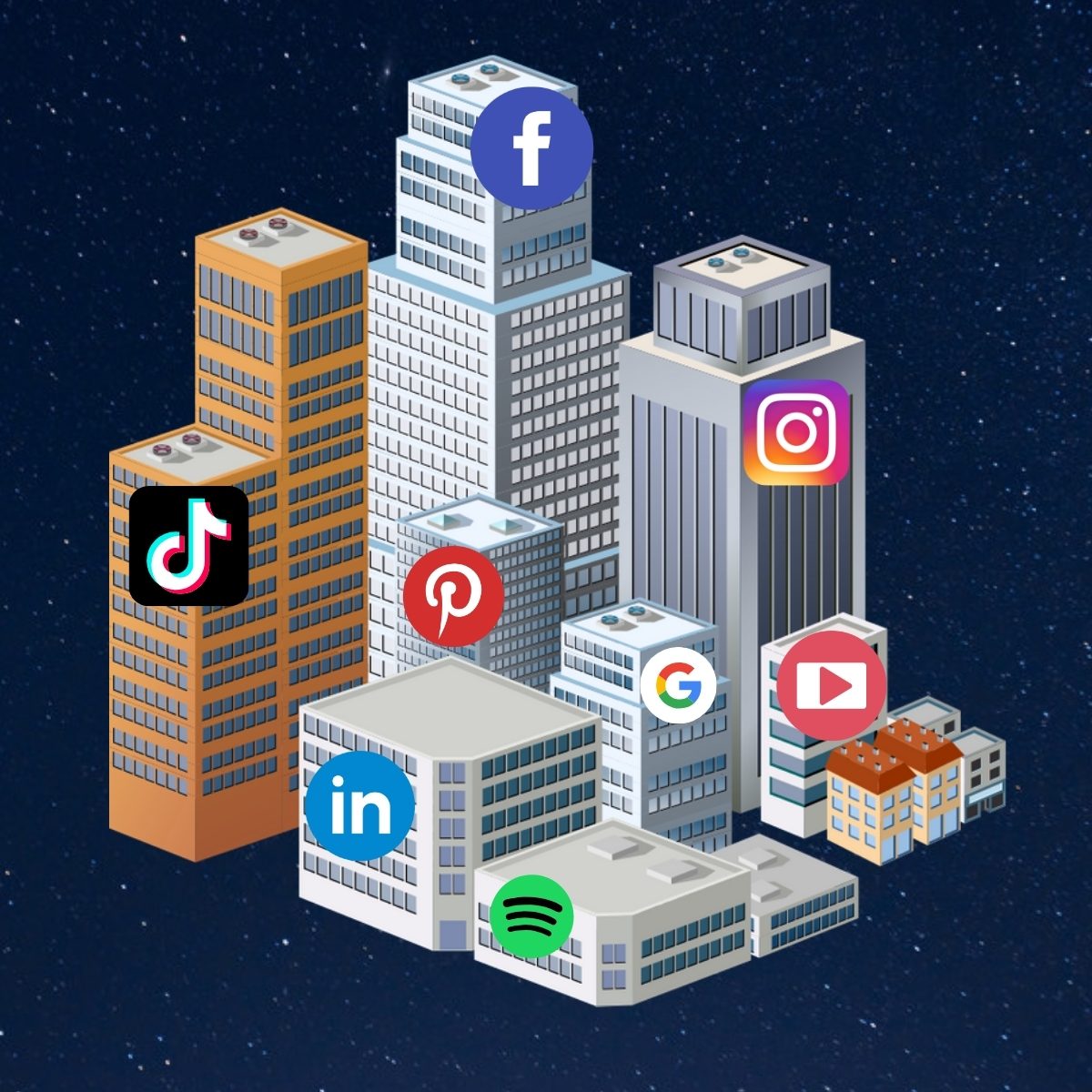
The people who confuse the skyline for the land are the ones who wake up to find their reach cut in half and no one to appeal to. The settlers understand: you post in the towers, but you build on your own ground.
The frontier model
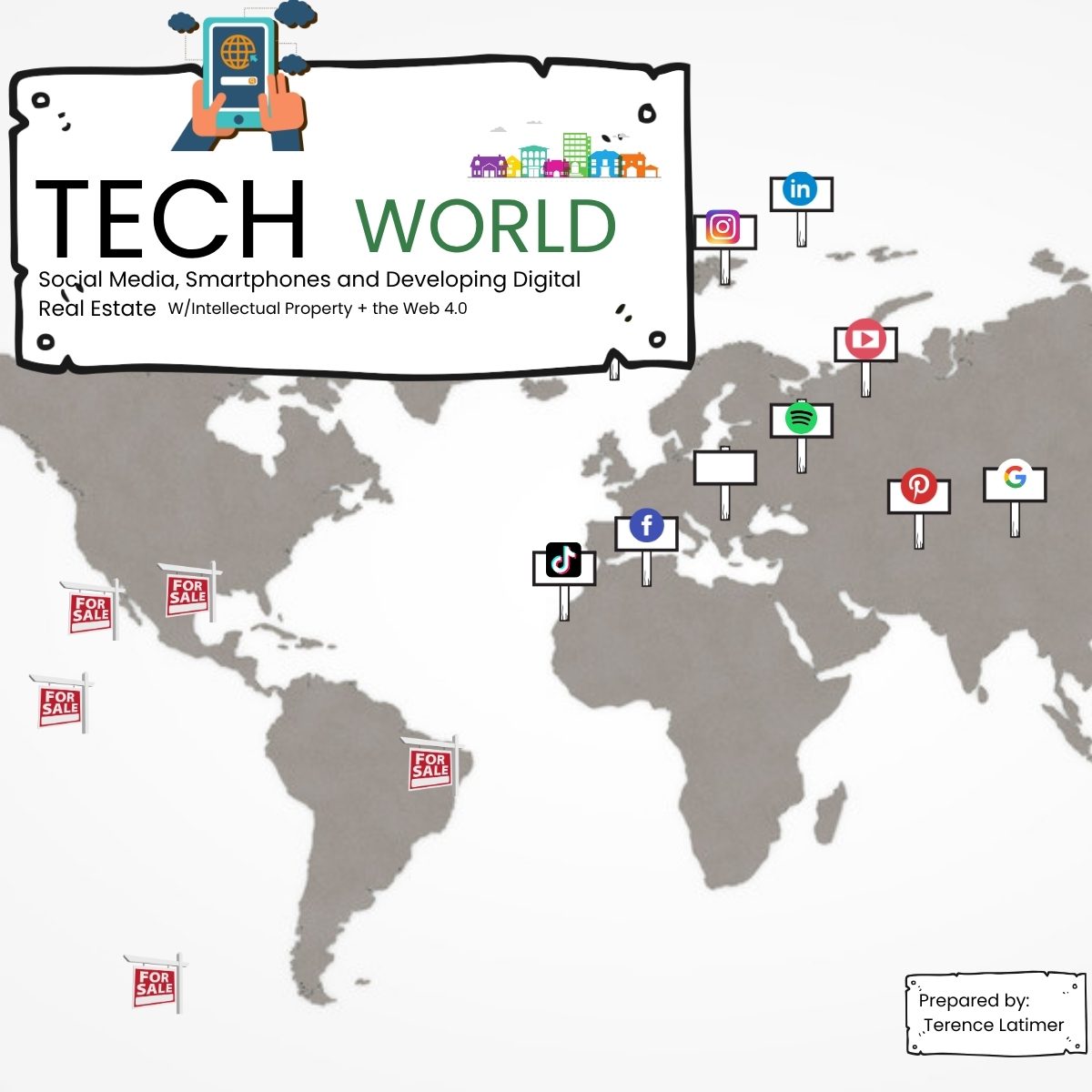
Why the language of land, settlers, and roads? Because the pattern is the same one that has driven human growth for all of history — and the online world runs the same loop, at global scale.
1
Move in
Get online at all — the first act of settling.
2
Read the layout
Spatial cognition: knowing how to navigate the space.
3
Build a home base
A place where people gather and share.
4
Connect the roads
Links between home bases become infrastructure.
5
Towns grow
Communities, markets, whole economies.
Then, exactly as on any frontier, “before you know it, you have online towns, communities, restaurants, experiences — every sort of experience that you can have offline all of a sudden either has an online component, or, in my opinion, will eventually become online only.”
The vehicle you travel in shapes what you can see — phone, laptop, tablet, and next AR, glasses, eventually clothing. Each new interface redraws the map. The settler’s job is to keep a working understanding of the layout even as the vehicles change underneath them.
From scarcity to abundance
The economic models we inherited are built on scarcity — only so much to go around, so the game is to capture and defend your slice. Digital real estate breaks that assumption. Virtual real estate is abundant; we can create as much of it as we can imagine. (One honest footnote: it all still rests on real physical infrastructure — servers, power, cable. The abundance is real, but it’s leveraged on top of the physical world, not free of it.)
When a frontier this open gets settled, three kinds of people show up:
The preservers
They use the new world only to mirror the old one — reproducing the offline experience online and keeping the existing rules intact.
The regressors
They use the new tools to drag things backward — to detract, to stifle, to take us, as I put it, “to the stone age.”
The settlers
The innovators and early pioneers who “establish those bases, those communities, those ways, the structure” — and so earn the chance to write the rules of the road.
This essay is addressed to the settlers. The rules of the road are still being written. The deeds are still cheap. That is the entire opportunity.
The 2026 checkpoint: where the frontier is now
Revisiting a six-year-old voice memo isn’t nostalgia. The frontier moved exactly where the memo pointed — and three things have hardened from prediction into consensus.
01
Owned authority is mainstream
Digital real estate now means owned online authority that captures attention, trust, and demand from search engines, AI answer systems, and buyers. [2] Ads are rent that fades in weeks; domains and content are ownership that appreciates. [3]
02
Buyers decide before they reach you
People form their opinion in the search result and the AI answer — often “before a call, before an email, and sometimes without a click.” [2] Your property is increasingly where the deciding happens.
03
A new layer has a name: GEO
Generative Engine Optimization means structuring your owned content so ChatGPT, Perplexity, Gemini, Google’s AI Overviews, and Claude cite and recommend you. [4] If AI doesn’t mention you, to a growing share of people you don’t exist. [5]
~70% → <20%
Reported overlap between who ranks on Google’s first page and who gets cited by AI. Visible the old way no longer means visible the new way. [6]
+25–28%
Measured lift in AI citations from adding sourced statistics, expert quotes, and explicit references. None of it requires fame. [8]
The honest complication
The frontier is never free. Research on GEO describes a “Matthew effect” — the already-famous tend to get cited no matter what, so the rich get richer. The unsolved problem belongs to everyone else: small operators, independent creators, early-stage builders. [7]
But the same research shows what actually earns a citation:
Concrete statistics with a clear source
Direct quotes from real expertise
Explicit references and clear, readable writing
Mentions of your work in places AI already trusts — even without a link [9]
All of it requires doing the owned-property work well, early, and in public. The settlers still have the edge. The land is just a little higher up the hill than it was in 2020.
Own your land. Own your domain.
Build on ground that carries your name on the deed — not on ground you’re renting from a landlord whose interests are not yours.
The through-line: sovereignty
This is not a technical argument. It’s almost a moral one, and it’s the reason I’ve never been able to let this thesis go. The platforms want you to believe the skyline is the territory — that your presence inside their towers is the same as owning something. It isn’t. Everything you build inside rented walls is built at someone else’s pleasure.
That was true when I said it into a phone on an empty desert highway in 2020. It is more true now, with AI deciding in real time whose property is worth citing. And it will be most true in whatever comes after — because the law of the frontier doesn’t change. The settlers who build on owned ground, early, write the rules.
FREE · A FEW MINUTES
Take the Digital Real Estate Audit
How much of your online presence do you actually own — and how much are you renting? Get a plain-language read on where you stand and what to build next.
Where this goes from here
This essay lives on land I own, where it will keep working long after any post scrolls off a feed — a piece of the digital real estate it describes. Everything above is the why. The series that follows is the how:
How to stake a claim
Owned vs. rented in practice: the domain, the site, the list.
Reading the layout
How people navigate your property across phone, desktop, and what comes next.
Building the roads
How the towns connect, and how a visitor becomes a neighbor.
The new high ground (GEO)
Building owned property AI systems trust, cite, and recommend.
Writing the rules of the road
Turning owned ground into compounding advantage.
Build your own digital real estate
The framework and the course, for non-technical builders.
I built all of this the way I’m telling you to build yours — with my own two hands, on tools I control, no permission required. If I can homestead this frontier from a truck on the Twentynine Palms Highway, so can you.
The land is still cheap. The rules are still being written. Come settle.
SOURCES
“Own It or Rent It,” Clear Brand Strategy (Oct 2025); “Your Website Is Digital Real Estate,” The Broker List (2026).
“Digital Real Estate vs Physical Property in 2026,” Infinite Media Resources.
Srivastav T., “The Great Digital Land Grab,” Medium.
“What Is GEO,” Similarweb; related 2026 guides from Enrich Labs and eSEOspace.
“The 2026 GEO & AEO Survival Guide,” Tenten Co., Medium.
LLMrefs, citing Brandlight research on Google vs. AI-citation overlap.
GEO-at-scale research (arXiv); LLM Pulse.
Clickforest, citing Aggarwal et al., “GEO: Generative Engine Optimization,” KDD 2024.
LLMrefs; Ansvisor, on unlinked brand mentions and off-site authority.