
This essay started as a voice memo I recorded in November 2026. The full video, with the slides and the data, is below. What follows is the same essay, edited for reading, with the sources linked.
The friendless epidemic
In 2026 we've been hearing a ton about the friendless epidemic: many of us are struggling to find meaningful friendships and relationships.
I don't have a ton of data for you, and I'd encourage you to do some of your own studying. But I do think about this through the lens of complex systems: the systems, the processes, the workflows and the steps we take to find friends and build meaningful relationships.
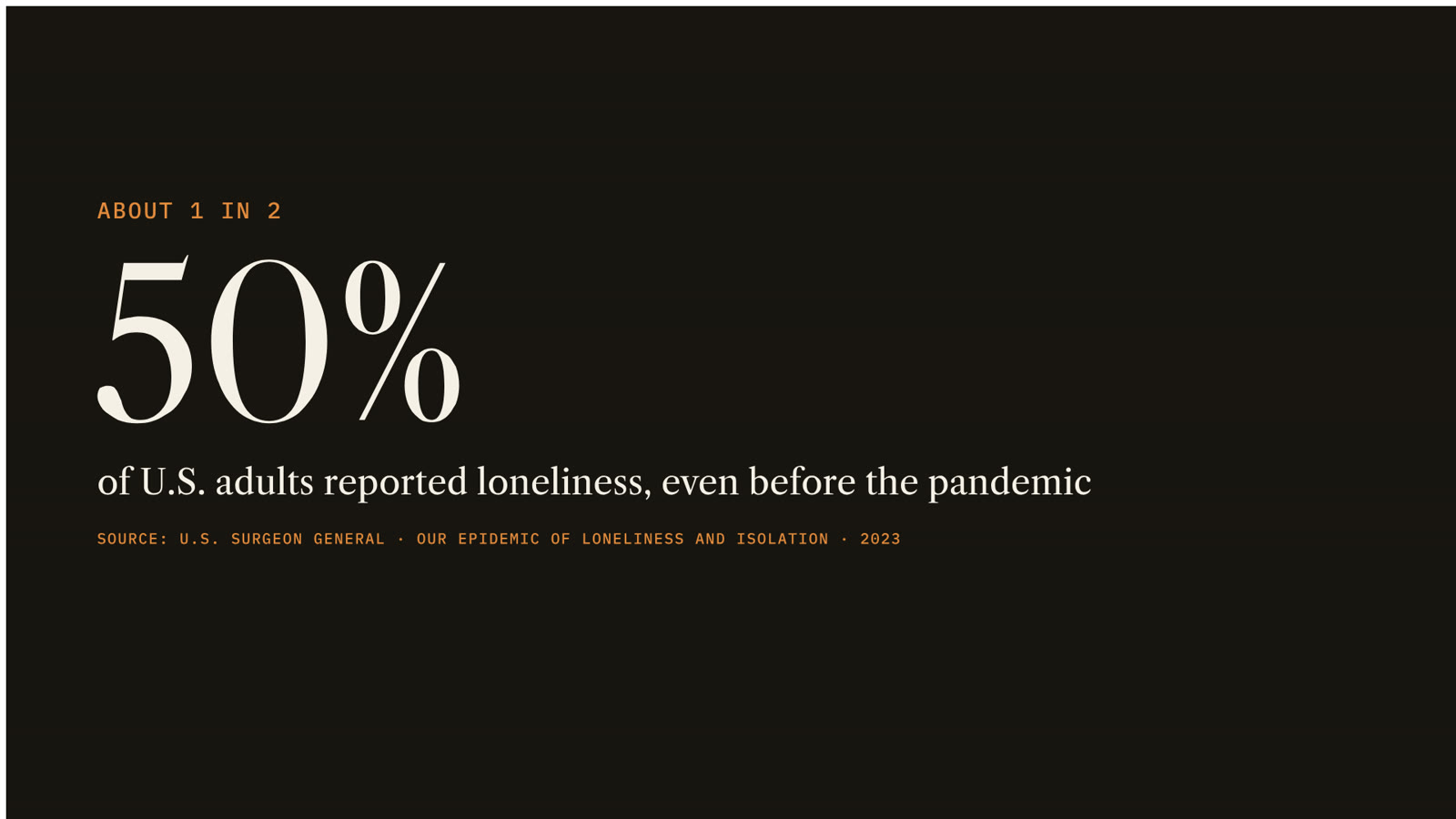
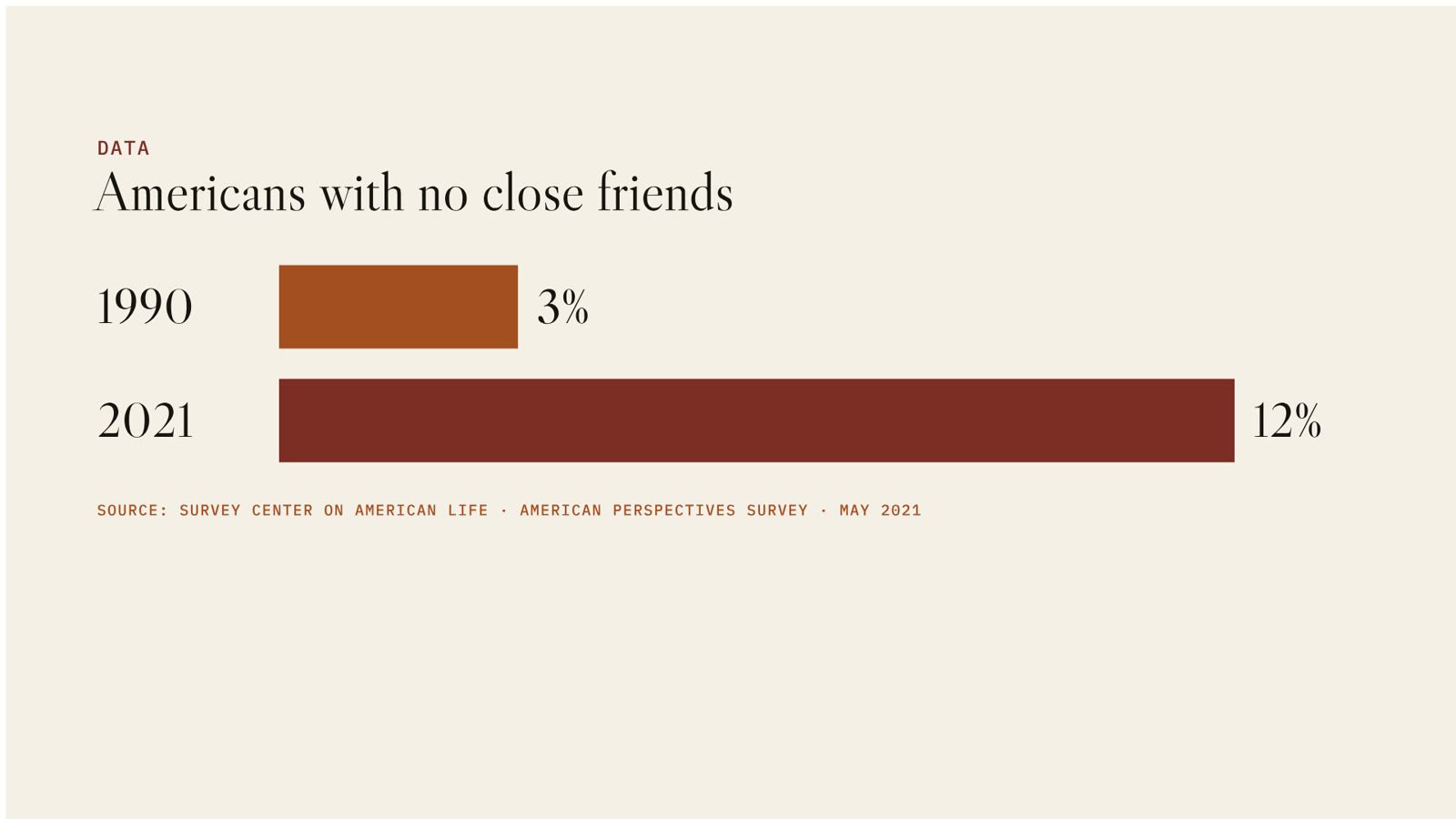
The numbers that started the conversation: the U.S. Surgeon General's 2023 advisory, Our Epidemic of Loneliness and Isolation, reported that about one in two American adults experienced loneliness, before COVID-19 made it worse. And the share of Americans with no close friends rose from 3% in 1990 to 12% in 2021, according to the Survey Center on American Life.
The male loneliness epidemic
I can speak to some of this as a man, a cisgender man. There's an additional layer: not just the friendless epidemic, but the male loneliness epidemic, where a lot of men are struggling to find meaningful friendships, and even romantic relationships.
Given the technology available to us in 2026, that strikes me as both odd and predictable.
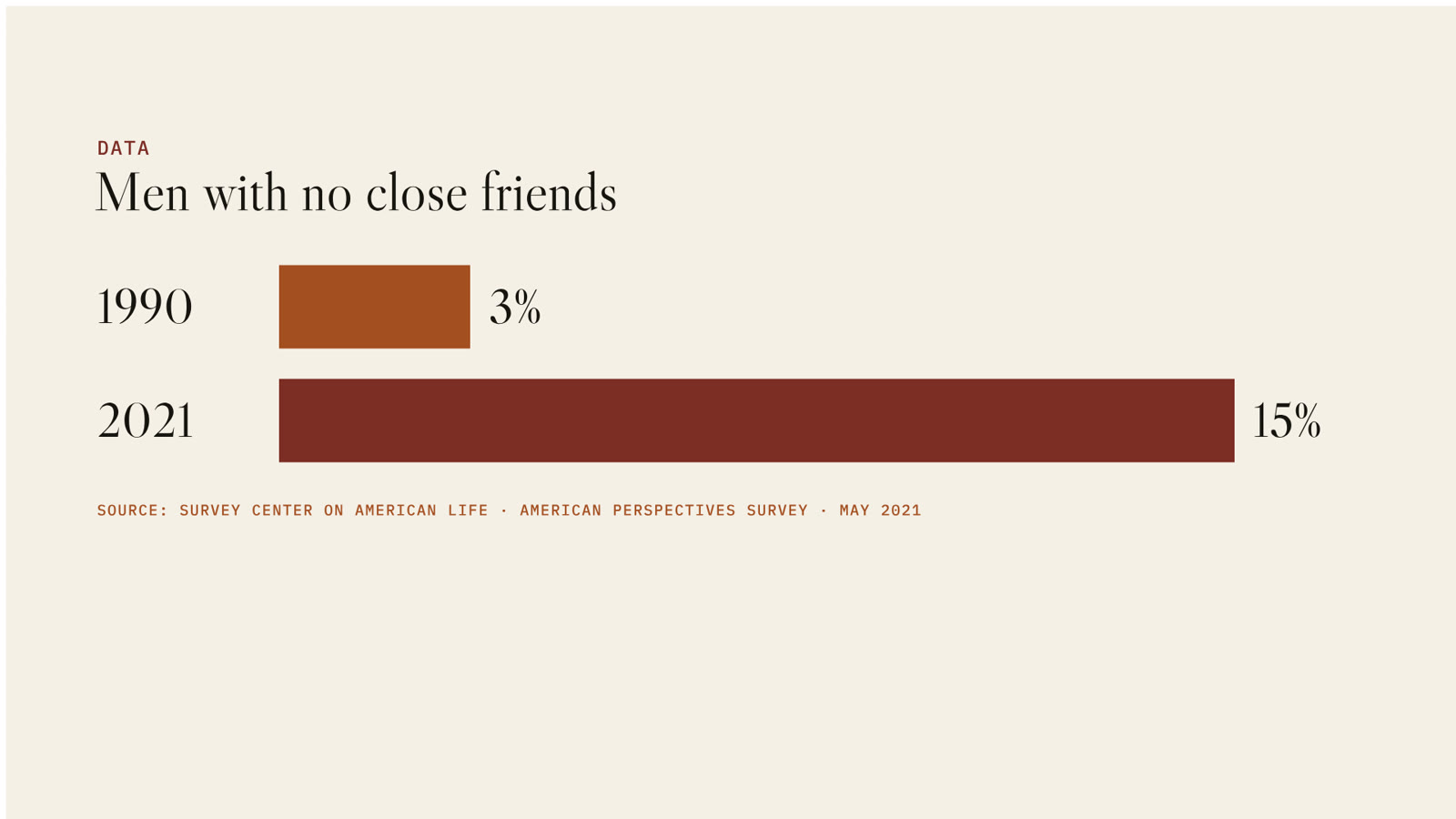
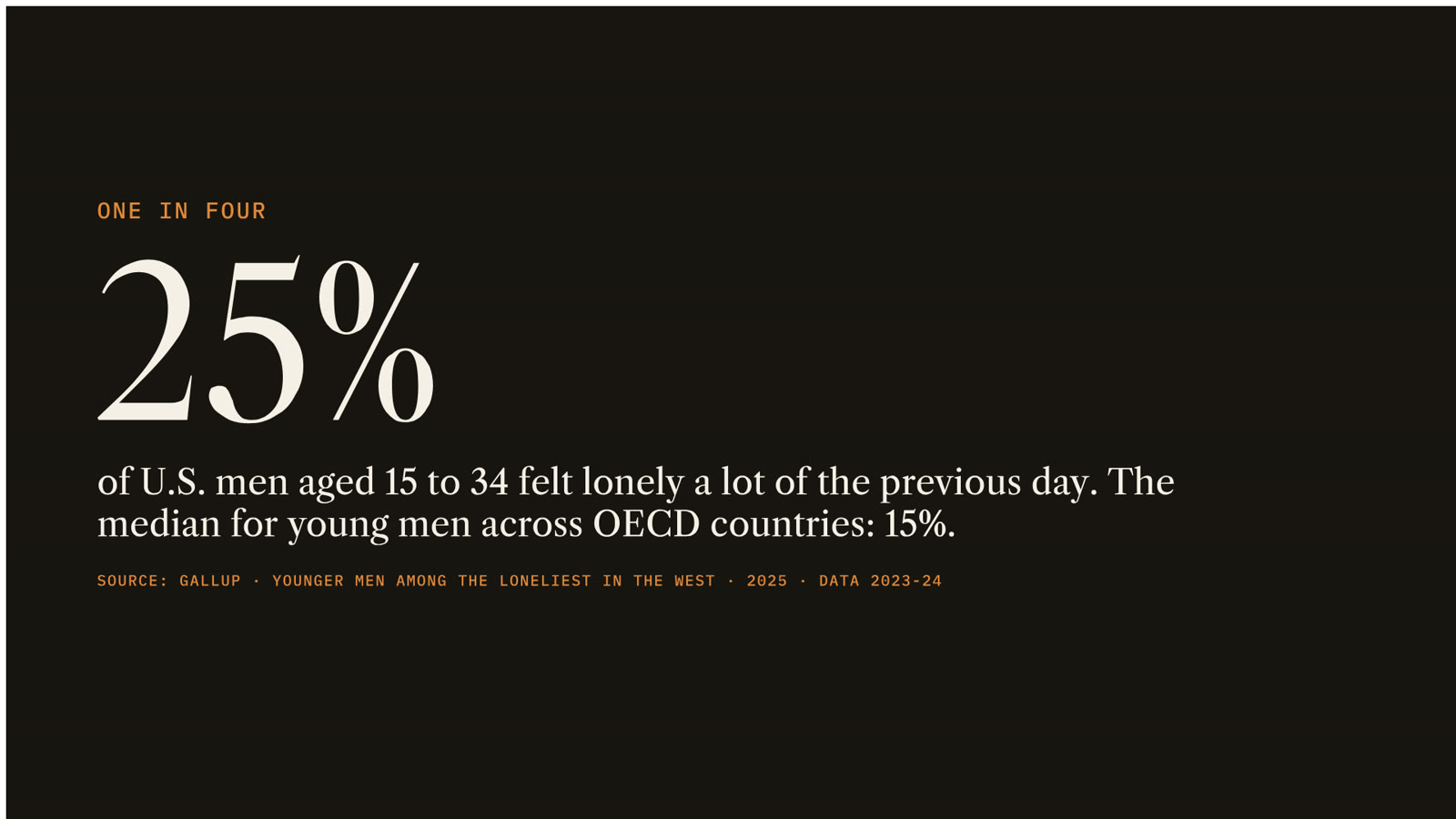
The same survey found men with no close friends rising from 3% to 15%. And Gallup found that a quarter of American men aged 15 to 34 felt lonely a lot of the previous day, well above the 15% median for young men across OECD countries. The research is debated (the 1990 and 2021 surveys used different methods, and a 2024 Pew survey found men and women about equally likely to have a close friend), but the direction is hard to ignore.
Together, alone
Most of the world, or at least a good portion of it, is online. You'd expect us to be able to find relationships and social circles there. They do exist. What we're struggling with is keeping the connection between offline and online, and back again.
I'm sure you've seen it: you're with a group of friends, and a good portion of them are sitting together but on their phones, looking at other people having a really good time online. And on the flip side, maybe you're at home, woefully feeling less than, because you're not having as much fun as those people appear to be having.
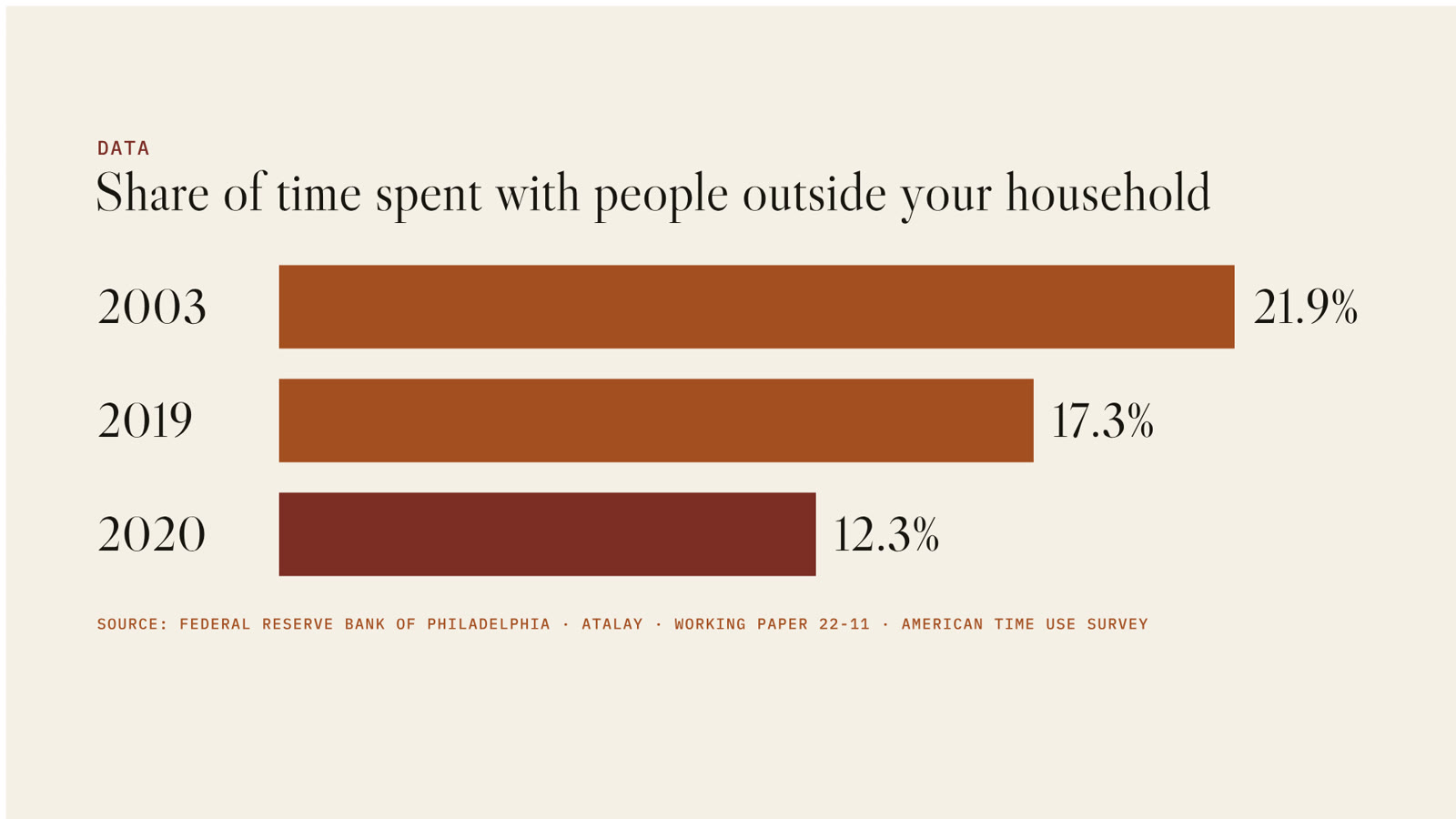
The time-use data tells the same story. A Philadelphia Fed working paper using the American Time Use Survey found the share of our time spent with people outside our household fell from 21.9% in 2003 to 17.3% in 2019, then to 12.3% in 2020.
Despite AI. Despite social media. I'm always betting on people.
A less-than replication
I'm a firm believer that online communication will never fully replace true, deep social connection. It's a less-than replication. (I've written about the limits of the written word in What the Machines Can't Hear.)
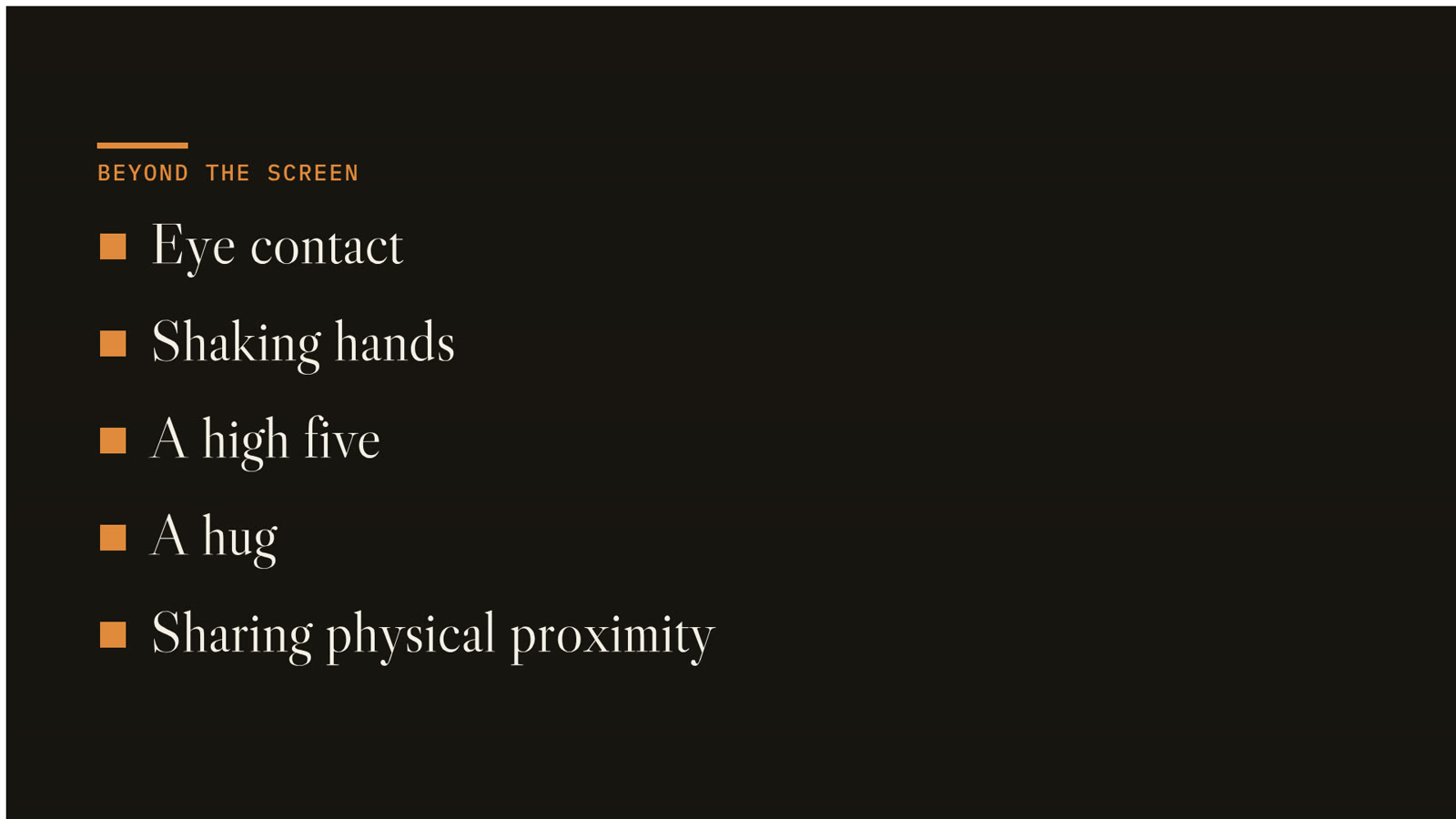
Eye contact with a friend. Shaking hands. A high five for someone you haven't seen in a while. A hug, a kiss, sharing physical proximity with someone.
The physics of trust
The closer the physical connection, the more we must trust the other person with access to the most intimate parts of ourselves. That's trust, and it's safety.
You want to high-five someone who keeps good hygiene, because you don't want to get sick. You want to kiss someone you're attracted to, who you feel safe enough to know is attracted to you, and who isn't going to hurt you, by not being faithful or in any of the ways we sometimes hurt one another when we're in relationship.
There's quite literally a physics to developing that trust and safety. It takes time, and space. And it's my hope you recognize that the journey is half the fun: the not knowing, the discovery, the risk. The time and space it takes to know someone, and the time and space it takes to be known.
Give and take
There's such a give and take. If we pour all of ourselves into someone without receiving anything in return, it feels depleting. If someone pours into us and we give nothing back, maybe we feel like we're exploiting them.
That's where balance comes in: a fair exchange of time and space, through this lens of being known and knowing.
Not everyone is worth the time
What I've found is that not everyone is worth the time and the space. We're all valuable as individuals. But authenticity, in my opinion, means recognizing that not everyone is deserving of you.
If they can't appreciate you, they shouldn't have access to you. If they show you they deserve that access, maybe they get to be close to you.
And it goes the other way. If you've shown that you can't be trusted with someone else's feelings, maybe you're not worthy of access to the people you want to know.
Witnessed and witnessing
We're all interested in being witnessed, and in witnessing.
The challenge with social media is that when we're consuming, and not creating moments and memories with each other, we're only doing the witnessing. We let the avatars that represent us online make false promises about who people are. (More on those avatars in Digital Twins and the Creator Economy.)
None of us are perfect. Despite what our most curated profiles would tell you, we all struggle. We all feel joy and pain and sadness. If someone only lets you see the good parts, without exploring the challenges of being human, then intentionally or not, they're lying to you.
Hero and villain
Western media and literature tell us we're all heroes in our own journeys, and there's some truth to that. The psyche needs to look in the mirror and justify our actions, both the ways we hurt one another and the ways we reinforce the good.
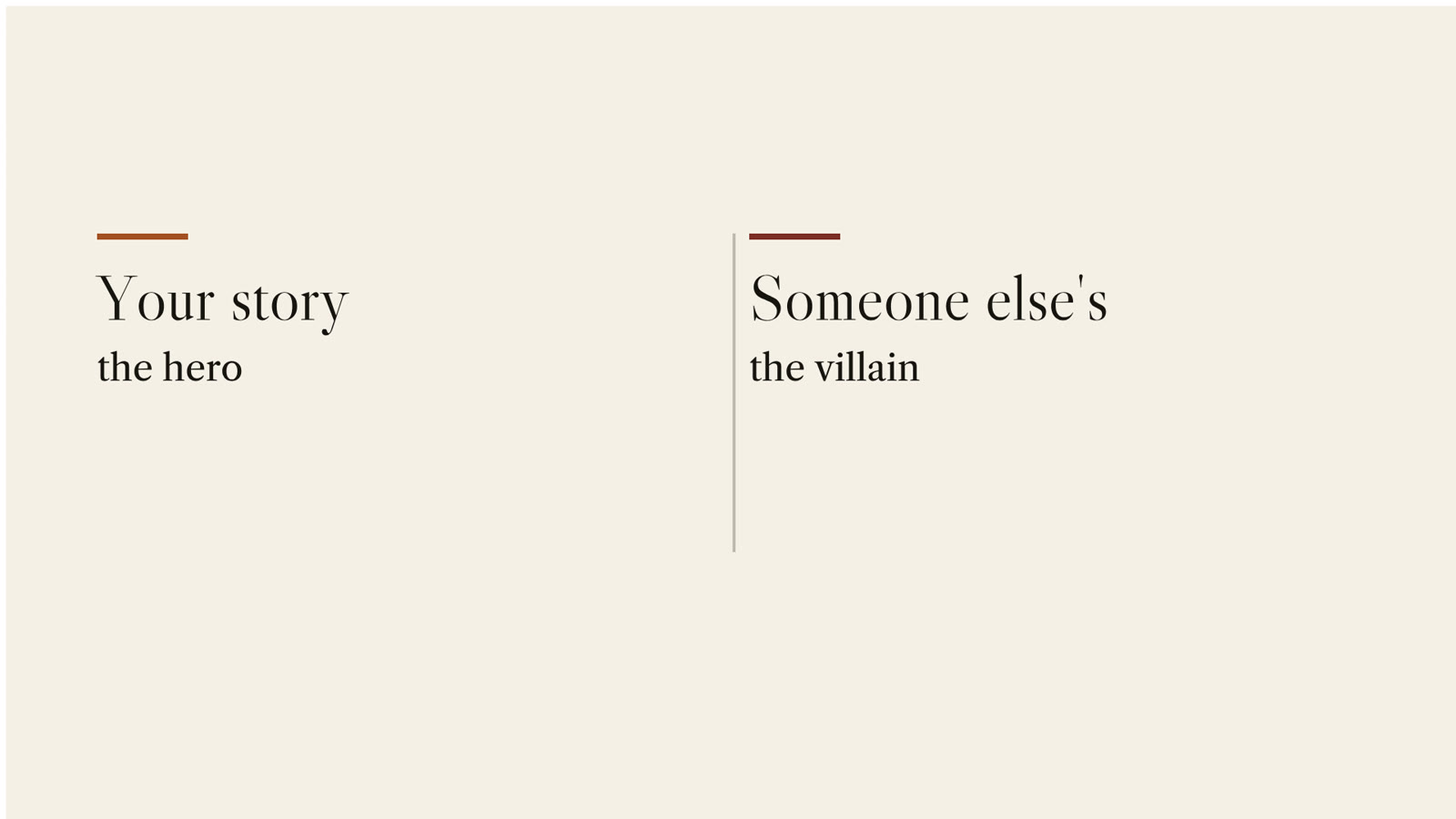
In the same way you're the hero in your own journey, at any given moment you're the villain in someone else's. You've got to crack a couple of eggs to make an omelet. Whatever your intentions, you're going to hurt people, and you're going to be hurt.
So you also have to recognize when you are, or have been, the villain. That's an uncomfortable truth social media doesn't embrace, especially with cancel culture and how easy it is to dismiss people whose performance is no longer acceptable. It's inauthentic.
Your loved ones will love you at the best version of yourself, and at the lowest.
Be your own best friend
Here's the thing about the physics of relationships: the time and space it takes to get close to others applies to your relationship with yourself too.
One of my favorite sayings is I am my own best friend. If you want to be in relationship with a community of people you'd like to be close to, be your own best friend first.
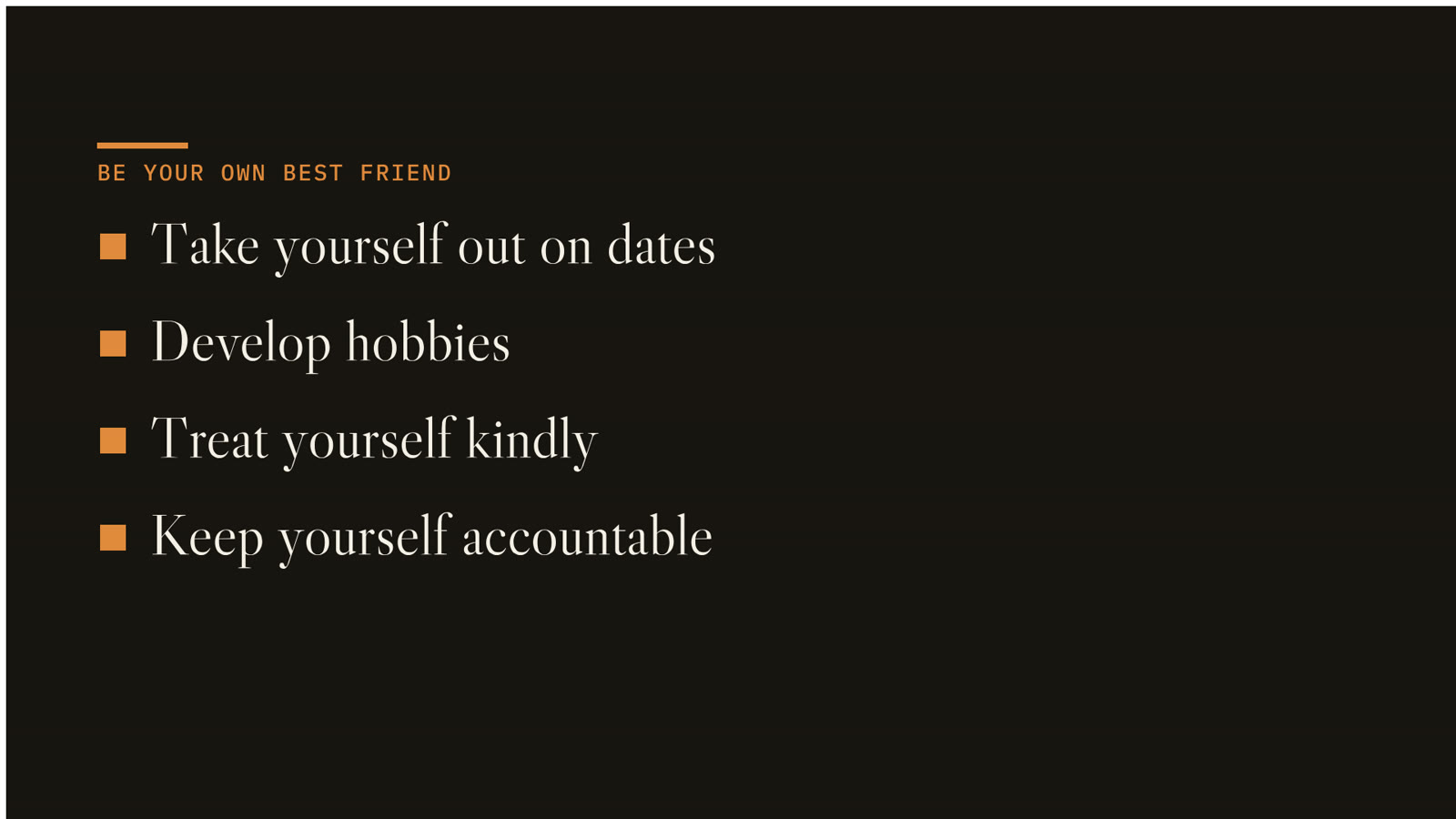
Recognizing the best and worst parts of yourself is how you build trust with yourself, and learn to reconcile what you feel with how you express it. (I wrote about that in Feel First, Then Emote.) Had a bad day? Don't yell at your neighbor. Go on a hike. Keep your promises to yourself when things are going well, and when they're not.
Once you've done that work, your community will begin to raise their hands. That's a core belief of mine.
Online to offline, and back
Some of the best friends I've found, I met online, because I wanted a positive outlet for how I express myself, and then we took those connections offline. And some I met in person, traveling or in college, and we kept it going online: following each other on Instagram or TikTok, your platform of choice. It works both ways.
(Two places I've seen this in action: what CRCD reminded me about building with a community, and what Black Week LA taught me.)
Three to five true friends
Growing up, one of my favorite authors was C.S. Lewis, and the line I've carried is that you're lucky in your lifetime if you have three to five true friends. I mostly agree.
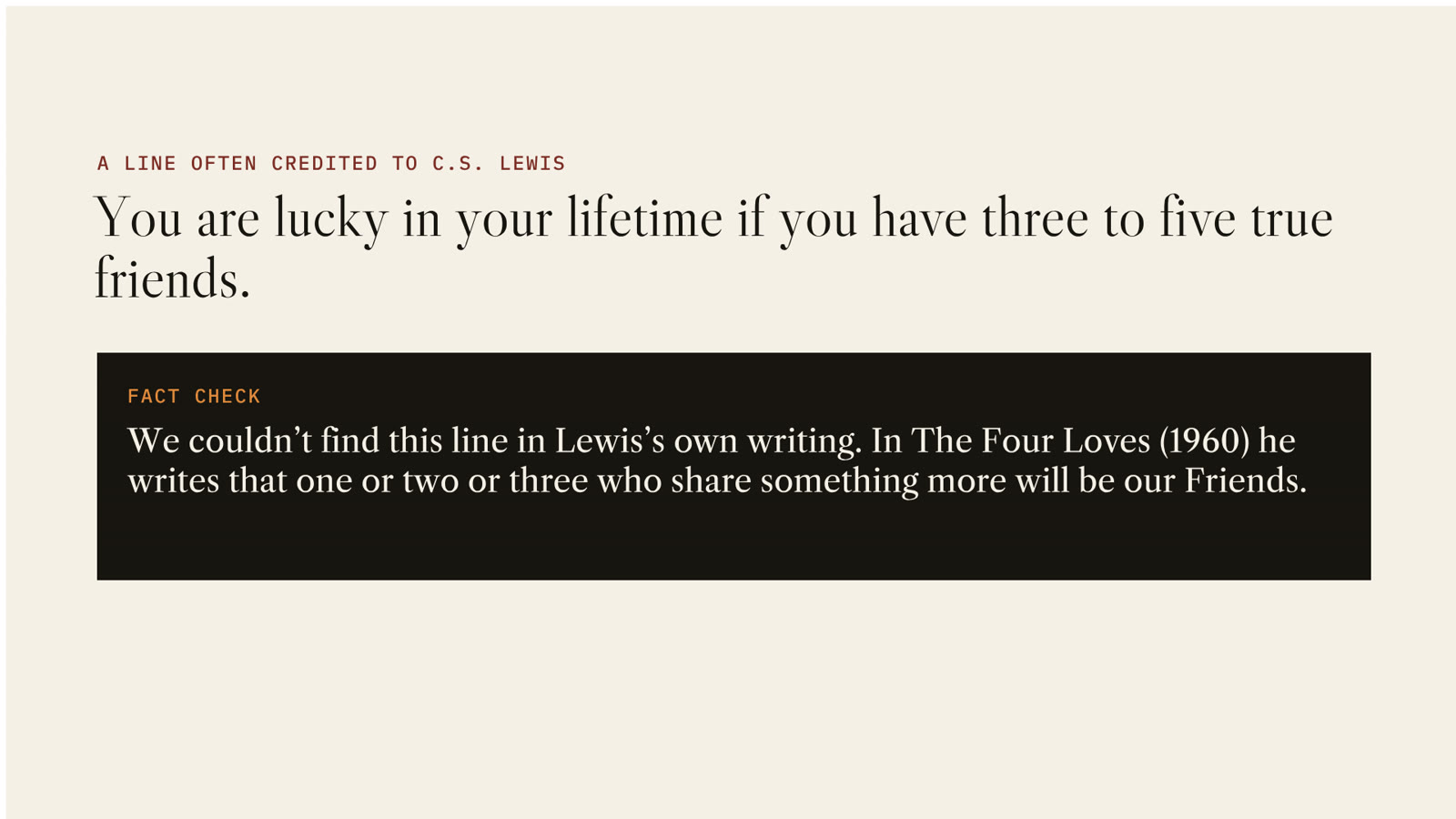
A note on that line: I couldn't find it in Lewis's own writing. The closest is The Four Loves (1960), where he writes that “one or two or three who share something more will be our Friends.”
So what do you mean when you use the word friend? A lot of us have a lot of acquaintances, and that's okay. Not everybody needs to be a friend. An acquaintance is not a four-letter word. Someone you met that one time, at that one place, that you don't have any problems with, is fine. You probably don't need to share the most intimate parts of yourself with people who haven't earned it.
And those acquaintances are gateways, pathways to new friends. (On telling the two apart: Judgment vs. Discernment.)
Seek out your tribe
Seek out your tribe. But before then, seek out yourself.
Watch and share
- The full video essay on YouTube (17:43, with chapters)
- Shorts from the essay: Not everybody needs to be a friend · I am my own best friend · You're the villain in someone else's story · Not everyone deserves access to you · I'm always betting on people
- On Instagram: @kingterentius · On TikTok: @terencelatimer
Sources
- U.S. Surgeon General, Our Epidemic of Loneliness and Isolation (2023)
- Survey Center on American Life, The State of American Friendship (American Perspectives Survey, May 2021)
- Gallup, Younger Men Among the Loneliest in the West (2025)
- Federal Reserve Bank of Philadelphia, Working Paper 22-11 (American Time Use Survey)
Want the next essay in your inbox? Get Write On, my monthly letter.