
Watch the video essay above, or read the written version below.
The calendar on the fridge
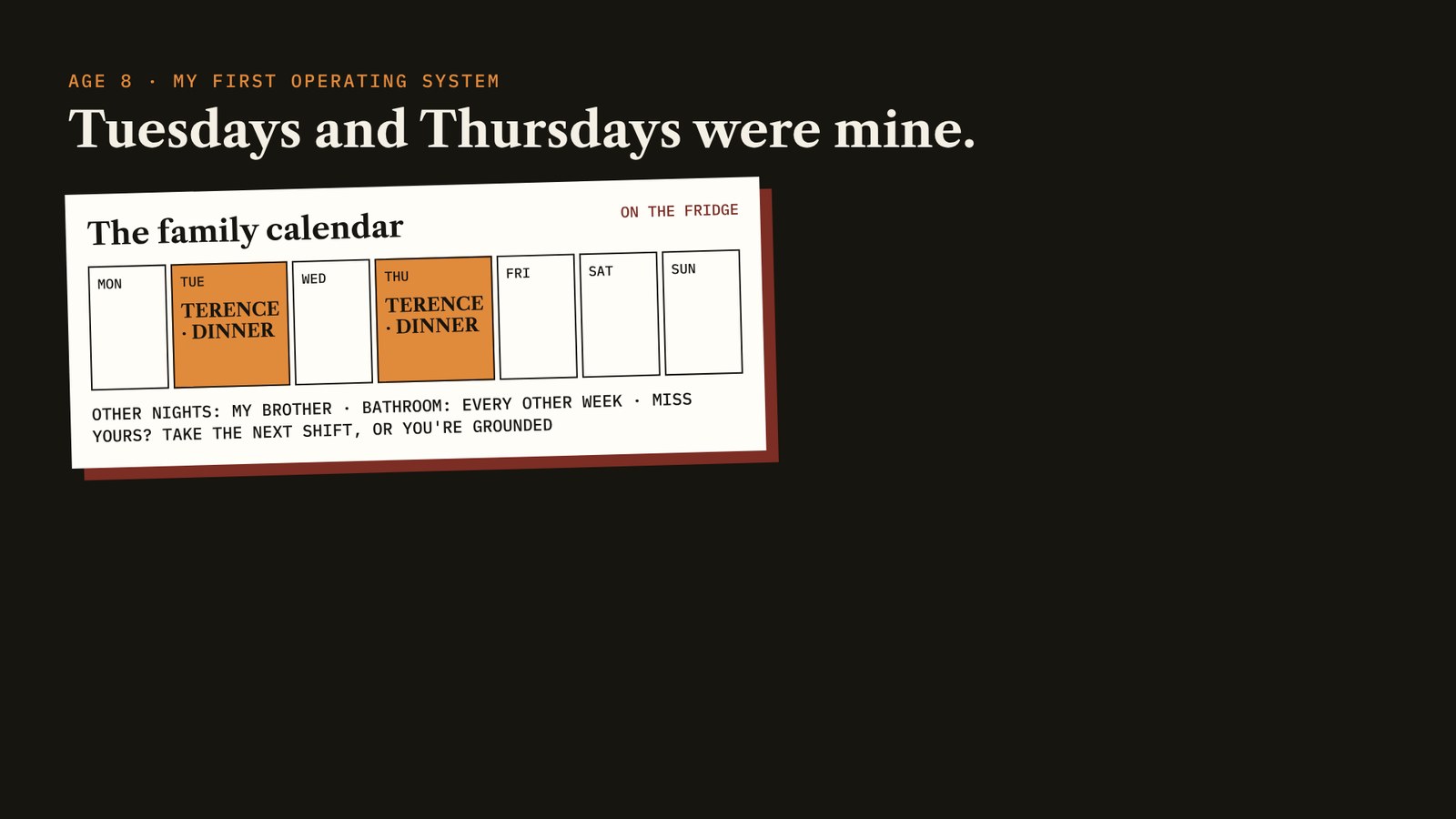
When I was eight, our family kept a calendar on the fridge. Tuesdays and Thursdays were my days to cook dinner for the family. My brother had his days, and every other week one of us cleaned the bathroom.
I didn't know it then, but that calendar was my very first operating system. And as a self-described computer nerd, operating systems are very important to the way I do things.
▶ Watch: the calendar on the fridge (0:00)
The Holiday Machine, by the numbers
Thanksgiving runs on the same kind of system, believe it or not. It's just bigger. About 81 million of us travel over Thanksgiving week. More than a trillion dollars moves through holiday shopping. And as Americans we eat tens of millions of turkeys, all in about five weeks.
Sources: AAA forecast, 81.5 million travelers; NRF, $1.013 trillion in November–December sales; turkey estimates range from nearly 30 million to about 46 million, depending on the year and the count.
So here's how the holiday machine works, with five ideas from systems thinking, and what my mom's fridge taught me about every one of them. Stay to the end, because there's a quiz.
Every system has an origin story
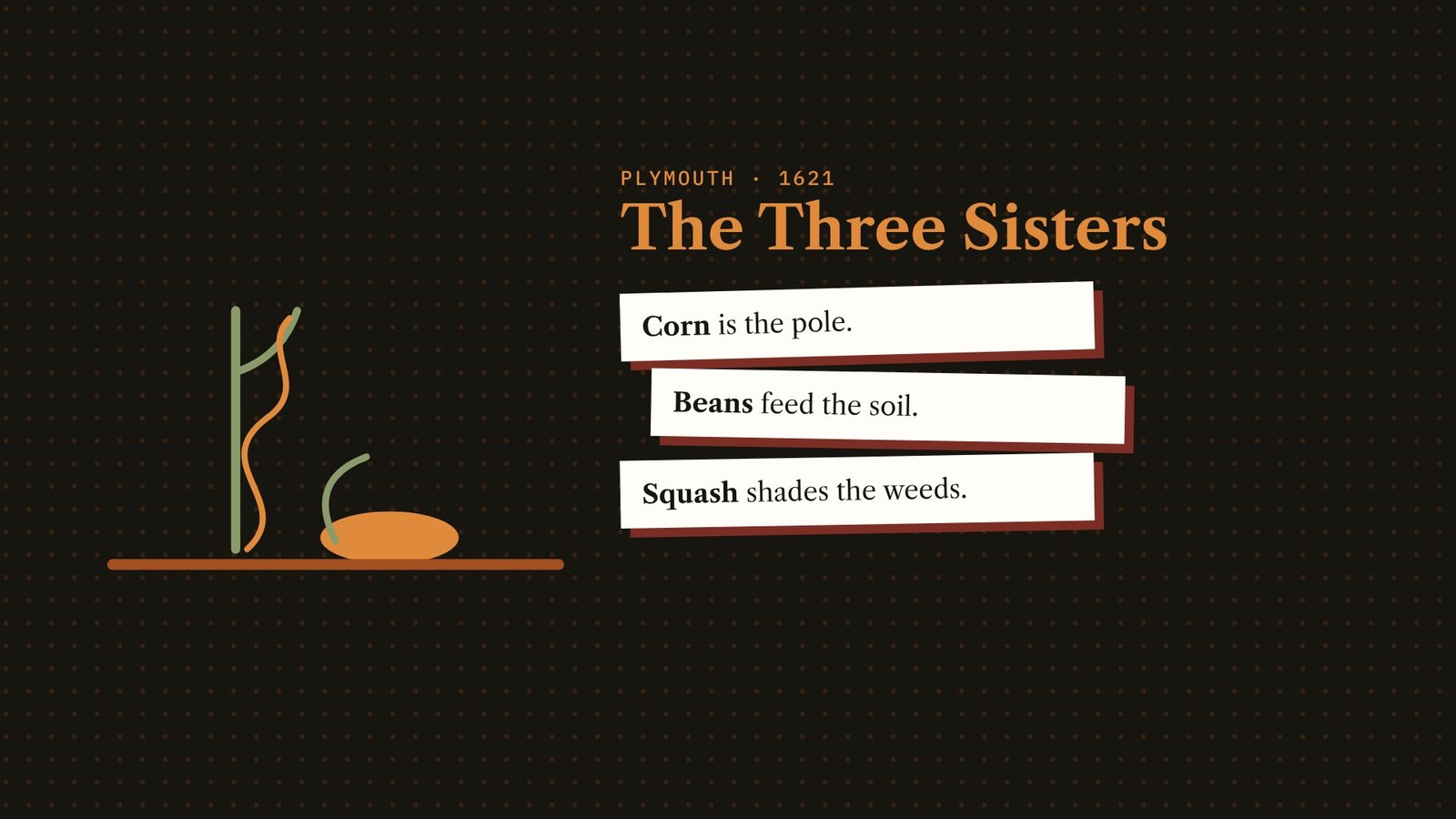
This one starts in a field. In 1621, English colonists at Plymouth had a harvest worth celebrating because of Indigenous knowledge: corn, beans and squash grown together, known as the Three Sisters. The corn is the pole, the beans feed the soil, the squash shades out the weeds. Three plants, one system, each doing a job the others can't.
Almost everything we know about that feast in 1621 comes from just two written accounts (Smithsonian). And in my humble opinion, the pen is mightier than the sword. Whoever holds the pen shapes the story. (It's the same question I asked in Google Built a Verb: who owns our words?)
Idea 1: the leverage point
A leverage point is a small push that moves a whole system.
For a couple of hundred years, Thanksgiving landed on different days in different places. Then Sarah Josepha Hale, the editor of Godey's Lady's Book, campaigned for one national date. On September 28, 1863, she wrote to Abraham Lincoln, and five days later he proclaimed a national Thanksgiving (National Park Service).
One editor. One letter. One holiday.
My mom's version of leverage was that calendar. One sheet of paper, and a whole household knew who was cooking, and when.
Idea 2: the feedback loop
Every system needs a way to correct itself. In our house, if you missed your chore, you picked up the other person's shift, or you got grounded. Push, consequence, correction.
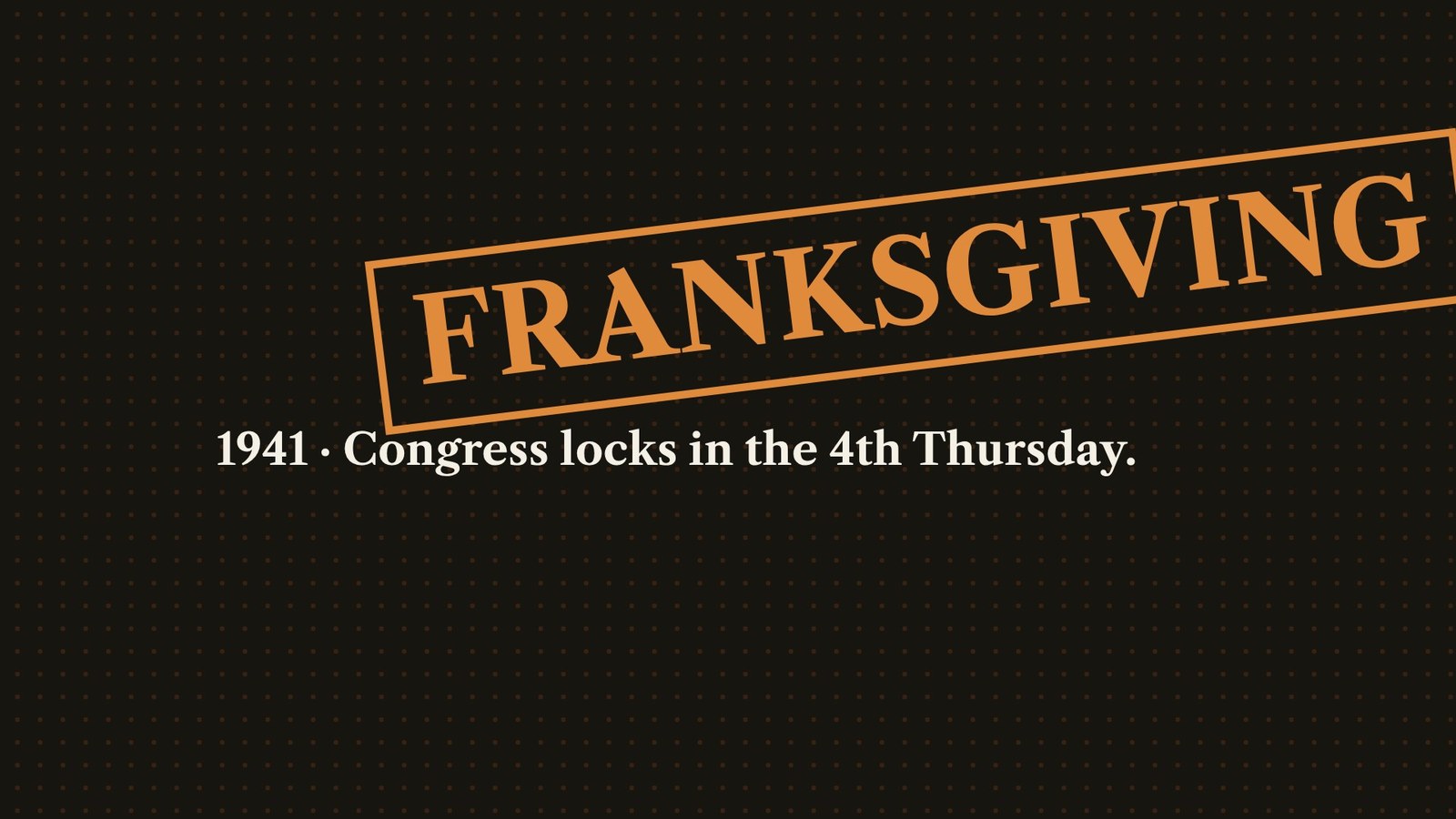
Our country ran on the same loop. In 1924, Macy's threw a Christmas parade on Thanksgiving morning to kick off the shopping season. In 1939, Thanksgiving landed late, so Franklin Roosevelt moved it up a week to give retailers more shopping days. Some states refused, and for three years America had two Thanksgivings. People called it Franksgiving. In 1941, Congress locked it in on the fourth Thursday (History.com).
Push. Pushback. Correction.
Idea 3: stocks, flows and the bottleneck
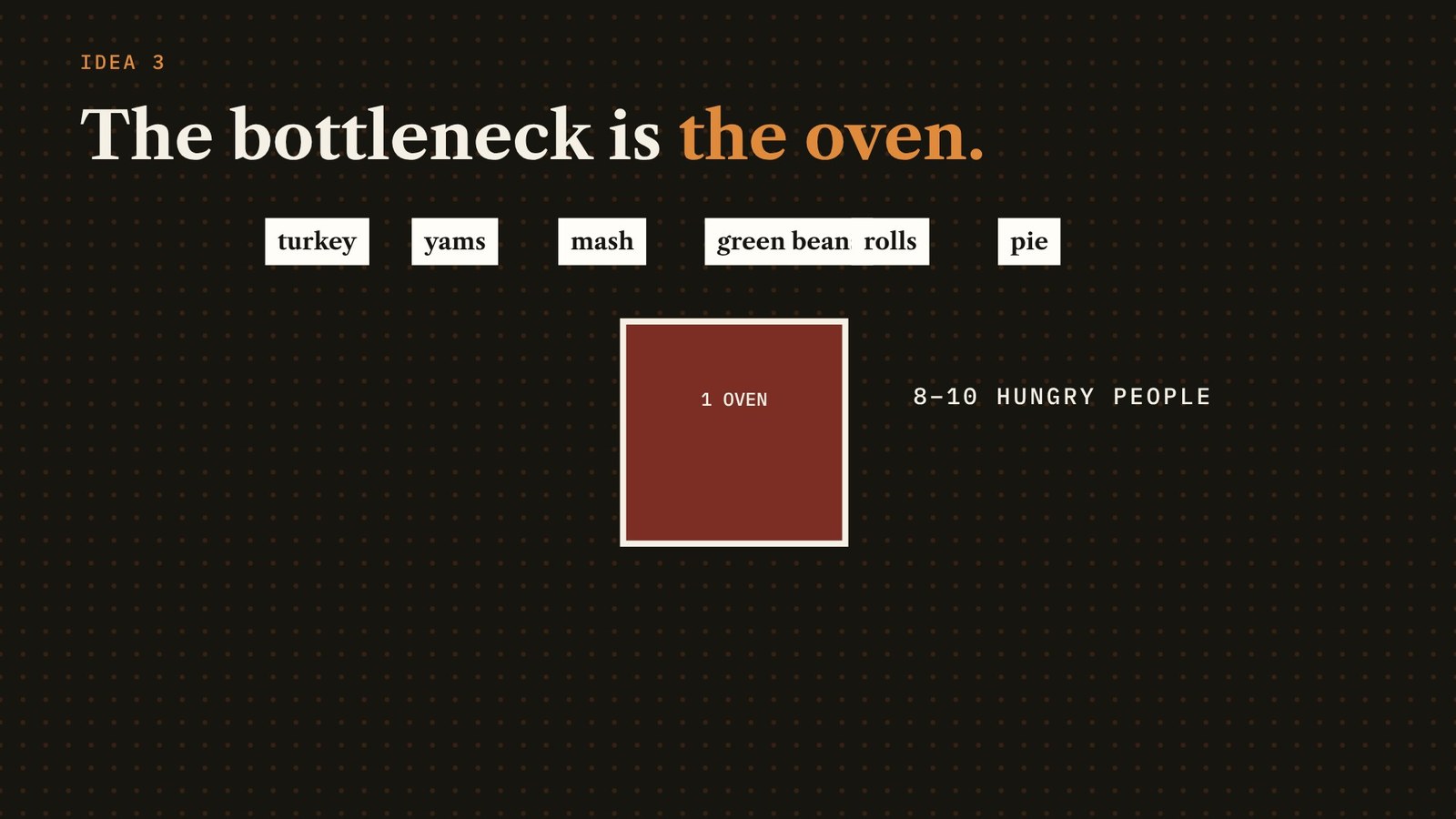
A stock is what builds up. A flow is how fast it moves.
I cooked my first Thanksgiving around 17 or 18, for 10 or 12 people, family and friends included. We had turkey, sweet potatoes, mashed potatoes, green bean casserole and, of course, crescent rolls. Here's what I learned.
The turkey is a stock problem. If it isn't defrosted, nothing else matters. If you leave the neck in, you've got a catastrophe.
And the bottleneck is the oven. Last year I hosted 8 to 10 people with one oven, and I was dealing with some very frustrated, hungry individuals. I didn't plan correctly.
The fix isn't cooking faster. It's moving the work upstream:
- Chop and prep everything before the oven even turns on.
- And don't forget the flow nobody plans for: six or seven loads of dishes afterward.
Idea 4: delegation
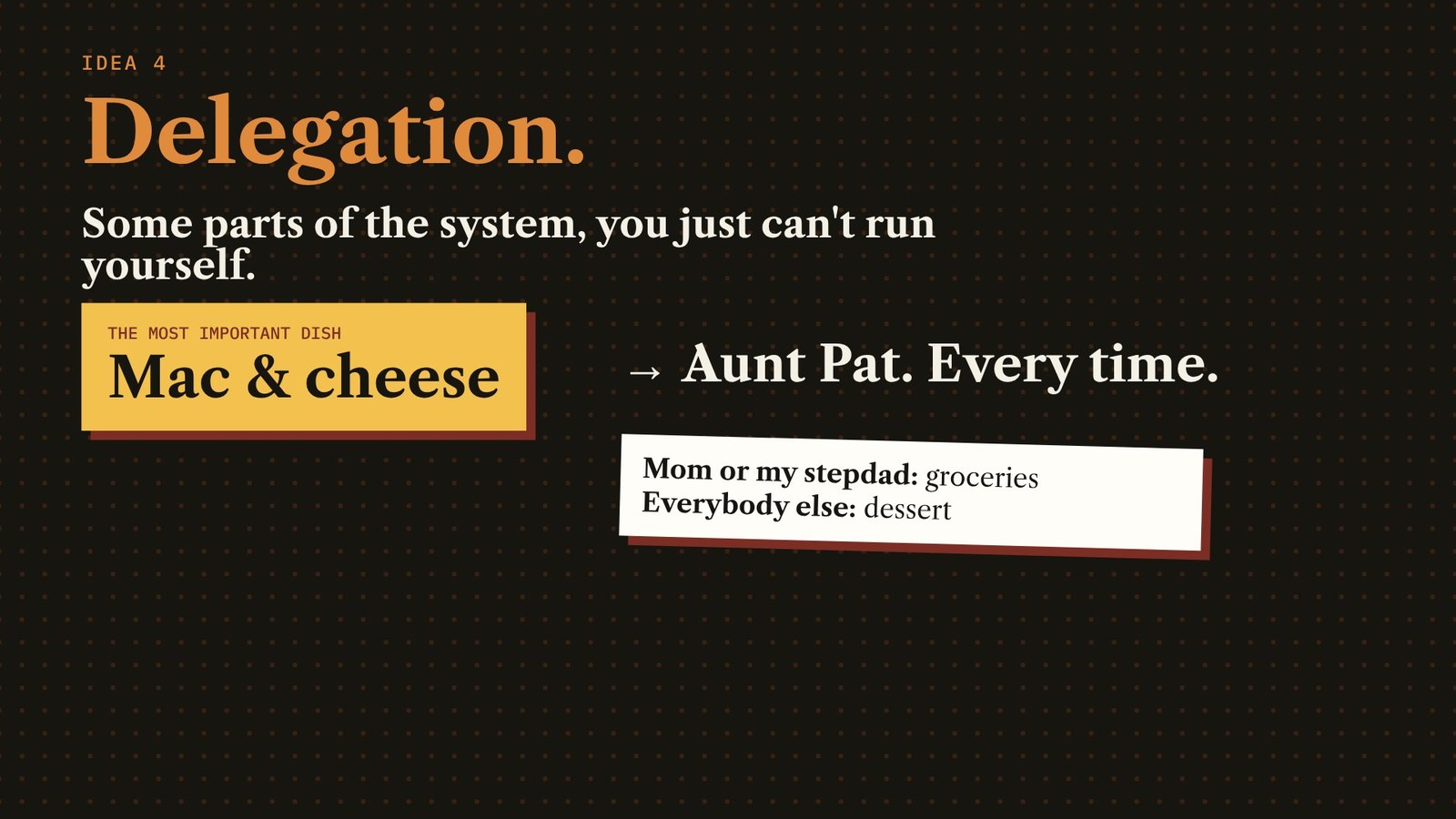
Some parts of the system, you just can't run yourself. In my household, I've learned the importance of sous chefs.
The rule is simple. The most important dish on Thanksgiving was the macaroni and cheese, so my Aunt Pat brought it every time. My stepdad or my mom covered the groceries, and everybody else brought dessert.
It's not about giving up control. It's putting the most important job with the person who does it best. Teamwork makes the dream work.
Businesses run on the same rule. It's how WWE built its stars, which I unpacked in The Superstar Machine.
Idea 5: emergence
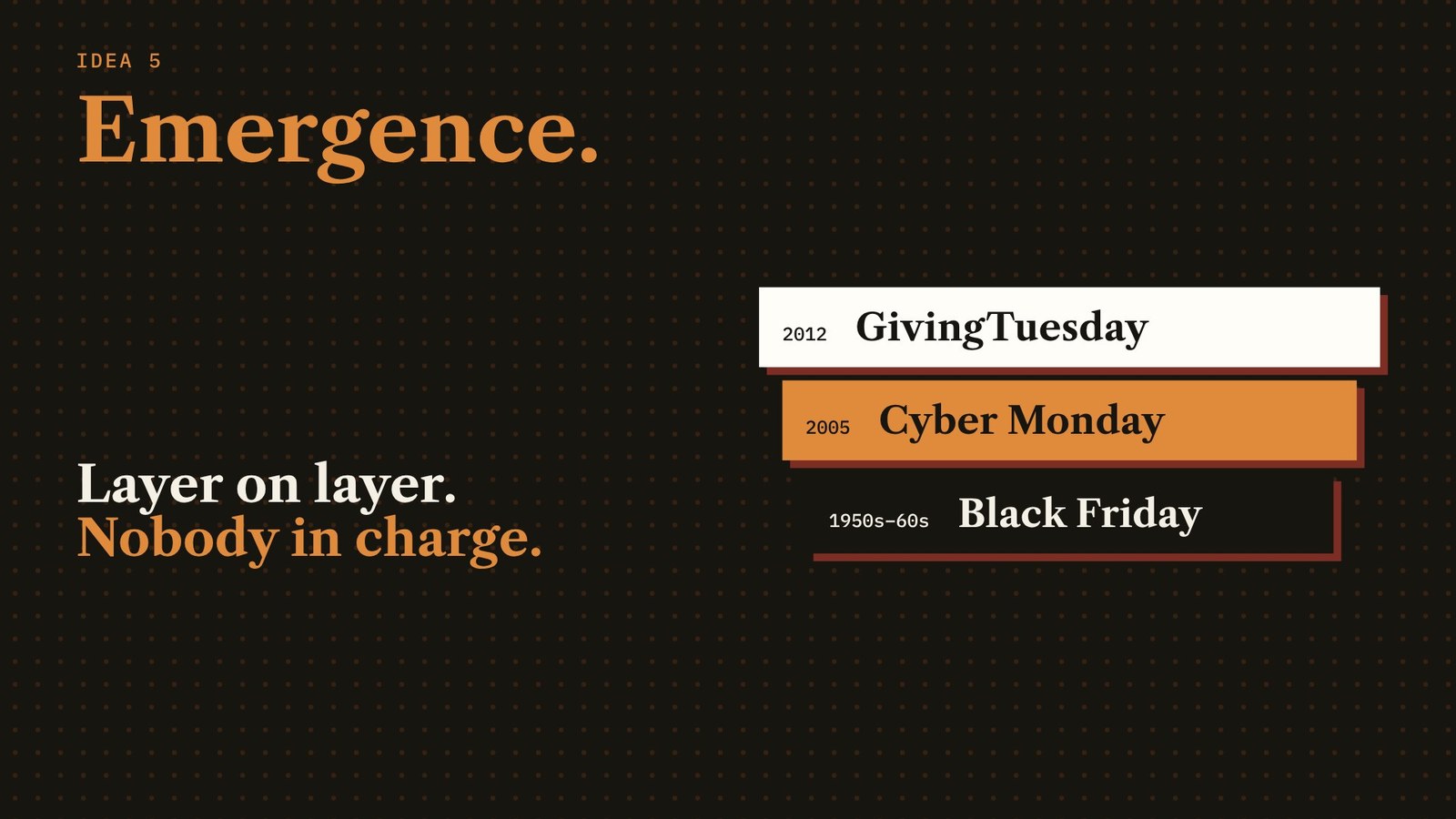
Here's my favorite part. Nobody designed holiday week. It emerged one layer at a time.
In Philadelphia in the '50s and '60s, police called the day after Thanksgiving "Black Friday" because of the traffic. Retailers later spun it to mean going into the black. In 2005, an online retail group coined the term Cyber Monday. And in 2012, a New York community center started GivingTuesday (Britannica).
Layer on layer, and nobody in particular was in charge.
I broke down the Black Friday part of the machine, and how to build an offer that runs inside it, in Black Friday Is a Machine, and my own offer is built the same way: the Systems Bundle, Nov 27–30.
Who's outside the machine?
Every system leaves somebody out, and sometimes it makes a show of it.
In the video I show film of a 1924 Thanksgiving parade in Detroit. Between the balloons and Santa's sleigh, there's a group of men in blackface, dressed as caricatured "tribesmen". Nobody behind the camera thought twice. The machine celebrated an idea of America by mocking the people it left out. (The clip is a few seconds long, shown in black and white and in context. It's in the full video only, not in the Shorts.)
In 1970, a Wampanoag leader named Wamsutta Frank James was asked to speak at Plymouth's 350th anniversary. Then he was told he couldn't give his speech. He gave it anyway, on Cole's Hill, and started the National Day of Mourning, held every Thanksgiving since (Mass Moments).
Remember the pen from 1621? Same lesson.
The lesson
I learned to cook from my mom; from a cookbook a librarian handed me when I was 10 or 11; from a high school cooking class; from watching a ton of Food Network growing up; and really from just burning stuff in the kitchen.
That's how systems get built: a little teaching, a little documentation, a lot of trial and error.
And funny enough, this year I'm not doing any cooking. We're going to my brother's place, and he's handling the meal. The machine runs without me, and that's the goal for every system you're a part of: your family dinner, your business, your city.
Find the leverage point, the feedback loops, the bottleneck and who owns what, and you can build something that doesn't need your hands on everything. (If the handoffs are where things break, start with Is Your Business Haunted?)
Systems words in this post
- Leverage point: a small push that moves a whole system.
- Feedback loop: how a system notices a result and corrects itself.
- Stock: what builds up (turkeys, dishes, guests).
- Flow: how fast it moves in or out.
- Bottleneck: the narrowest point, which sets the pace for everything else.
- Emergence: a pattern nobody designed, built from many small parts.
These terms come from systems thinking; Donella Meadows's Thinking in Systems is the classic introduction.
Quiz time
Which is bigger online: Black Friday or Cyber Monday? Answer in the comments on the video. Happy Turkey Day.
The five ideas also run as short clips this week on YouTube Shorts, TikTok and Instagram.
Want to find the bottleneck in your own system? Start with my Digital Real Estate Audit, or book a 15-minute call.
More creative technology: The Superstar Machine and GTA's Real Genius Is Technology.
Footage in the video: A Thanksgiving Proclamation, Connecticut, 1938 (Connecticut State Library, CC BY 3.0); Thanksgiving parade, Detroit, c. 1924 (Detroit Historical Society, public domain); Thanksgiving aboard USS Carl Vinson, 2014 (U.S. Navy, CC BY 3.0); Thanksgiving Day Parade time-lapse, 2012 (Adnan Islam, CC BY 3.0). Music: an original track.
I'm Terence Latimer: a creative technologist, writer and entrepreneur based in 29 Palms, and I split my time in Los Angeles. I founded Latimer Digital and own and operate Black Cactus Coworking. Get my monthly letter, Write On, or find me at terencelatimer.com/links.